Both cold rolled and hot rolled steel start out
as large steel slabs or billets cast from hot liquid metal. The billets
are then heated, eventually reaching over 1700¡ãF. At this high
temperature, they are easily flattened into a long sheet using a set of
rollers, and then wound up into large coils. To make bars or plates, the
heated billet is rolled to the desired thickness and cut into sections
before cooling.As the rolled or cut steel cools to room temperature, it
shrinks slightly, making the final dimensions of each piece less exact
and the edges somewhat rounded. The surface is slightly rough and
covered in scale. At this point, hot rolled steel products are ready for
shipment, and require no further treatment.
But cold rolled steel products are destined for further processing after the steel has cooled. Cold rolling is most often used to decrease the thickness of plate and sheet metal
in the manufacturing stage. This ¡°cold forming¡± occurs either by
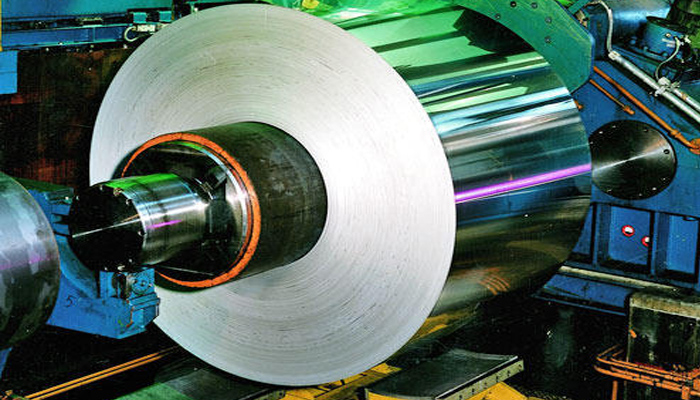
re-rolling at around room temperature and then coiling into sheet, or
else drawing into bars or tubes. Additional steps such as drawing,
grinding or turning create the desired finished product.
Work
hardening of the metal at room temperature increases its hardness and
yield strength by introducing crystalline defects, but also may cause
internal stresses that must be relieved by heating, or else the final
product may warp.
hardening of the metal at room temperature increases its hardness and
yield strength by introducing crystalline defects, but also may cause
internal stresses that must be relieved by heating, or else the final
product may warp.