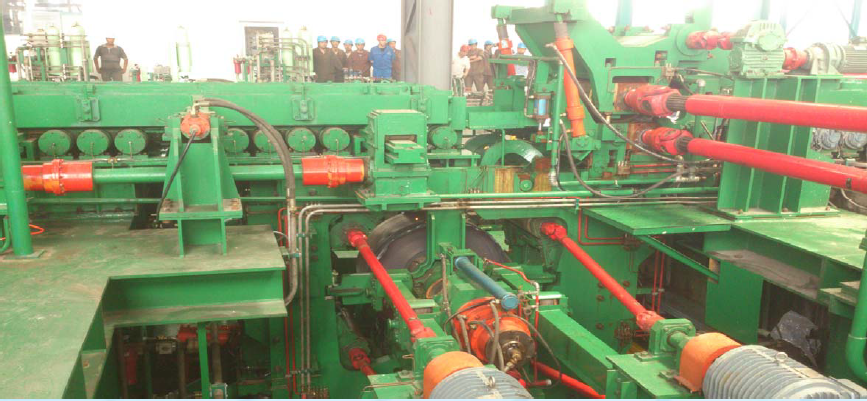
Part 1 Production scale,
raw materials and product specifications
1. Production scale: Annual production 0.8~1.2 million tons
2.Raw material£ºContinuous casting
billet¡¢slab strip
Blank thickness: 150~200mm
Blank width: 150~480mm
Blank length: 6~12m
Steel grade: carbon structural steel, high-quality carbon
structural steel, stainless steel
3.Product
specifications:
Thickness: 1.0~8.0mm
Width: 145~500mm
Steel roll weight:
Max 5600kg
Outer diameter of
steel roll: Max ¦µ1650mm
Inner diameter of
steel roll: ¦µ500mm
Part 2 Process flow introduction
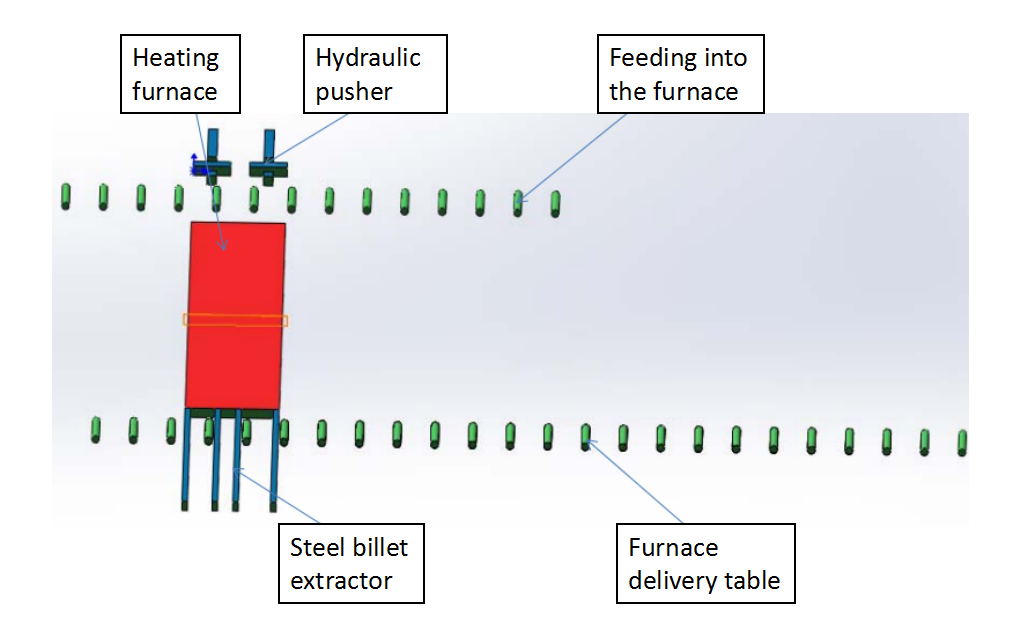
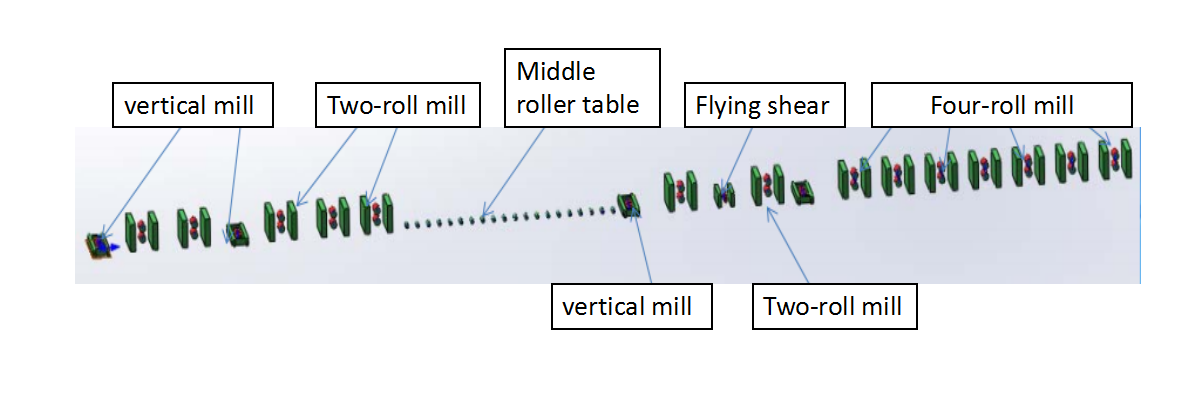
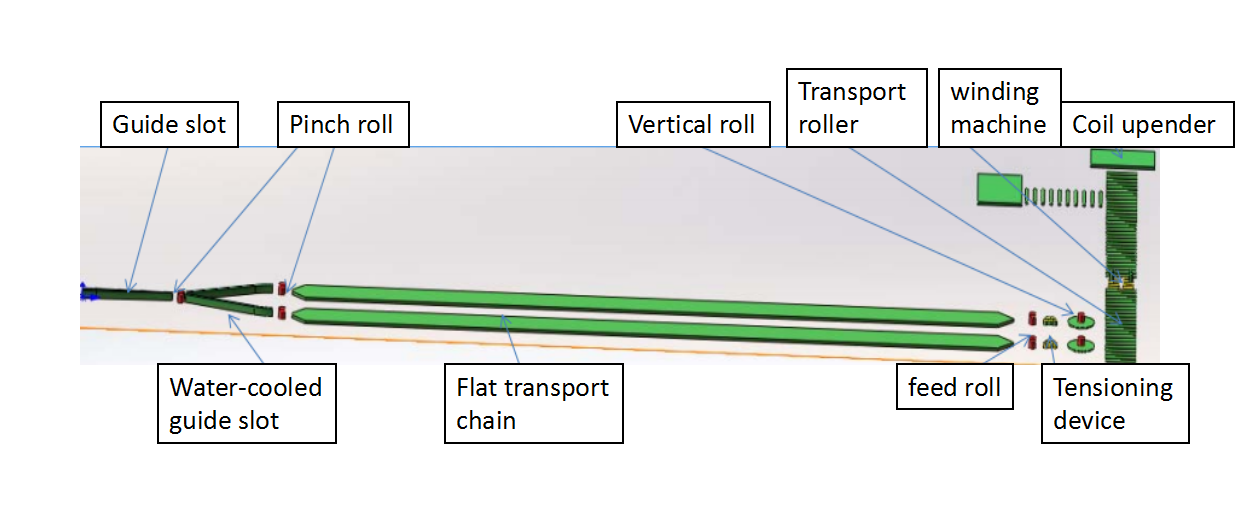
Part 3
Rolling line configuration and unit
characteristics
The hot rolling steel mill adopts a full continuous rolling
arrangement, rough rolling and finishing strip rolling
A.
The roughing unit is
generally composed of two vertical rolls and five horizontal rolls (if forced
wide-rolling, the arrangement is two vertical and six horizontal). There is no
looper between the frame, using the micro tension to hot rolling. In order to ensure
the width accuracy of the strip, the rough rolling stand is hydraulically
pressed and realizes short stroke control of AWC+SSC head and tail width. The
rolling method of rough rolling two-roll mill is hydraulic APC.
B.
A heat preservation
cover is arranged on the transmission line side between the roughing mill and
the finishing mill. The heat preservation cover is used to reduce the heat loss
of the intermediate blank, ensure the temperature of the intermediate blank
entering the finishing train, and obtain a product with uniform mechanical
properties.
C.
A drum-type flying
shear is arranged between the F1 and F2 of the finishing mill. It is used for
optimized billet cutting and helping the finishing mill bite into the billet
D.
The finishing mill is generally composed of
two vertical rolls and nine horizontal rolls (suitable for rolling 1mm strip
products), and electric loopers are arranged between the frames to ensure
constant tension rolling; all rolling mills are hydraulically pressed. The
rolling method of the last four flat rolling mills of the finishing mill is
hydraulic AGC, which automatically controls the thickness, presses the pressure
feedback and pressure signal in the system, and the magnetic displacement
sensor is used for the closed loop control and digital display of the roll gap.
E.
The roller adopts the
four rows of short cylindrical roller to bear the rolling force. And the thrust
bearings to support the axial force.
F.
Rough mill and
finishing mill use the DC motor to drive.
G.
The main mill reducer
of rough mill and finishing mill adopts hard tooth surface reducer, and the
reducer bearing adopts SKF, FAG or Timken imported products.
H.
The vertical mill is
used to control the width of the strip. All the vertical mills are separate
mills.
I.
The roller of the
full line and the furnace zone and rolling zone is lubricated by oil and gas.
J.
The dust removal of
the finishing mill is combined with water pressure and plastic burning board.
K.
The roughing and
finishing mills change rolls by hydraulic.
L.
Both the roughing
mill and the finishing mill are equipped with adjustable inlet and outlet
guides.And the coarse and fine-rolling guides can be adjusted by full hydraulic and
displacement sensor.
M.
After the finishing
mill, there are advanced measuring instruments such as thickness gauges and
width gauges, and the width and thickness of the strip can be monitored in real
time.
N.
A simple ultra-quick
cooling device is added in tripledistrict to reduce the maximum temperature of
the strip by about 150¡æ, effectively reducing the scale and
improving the microstructure of the product.
O.
Pinch rollers in
triple districtbead weld hard alloy on the surface.
P.
Adopt vertical winder,
and winder is reduced-core type.
PART4
Main equipment structure parameters
1.
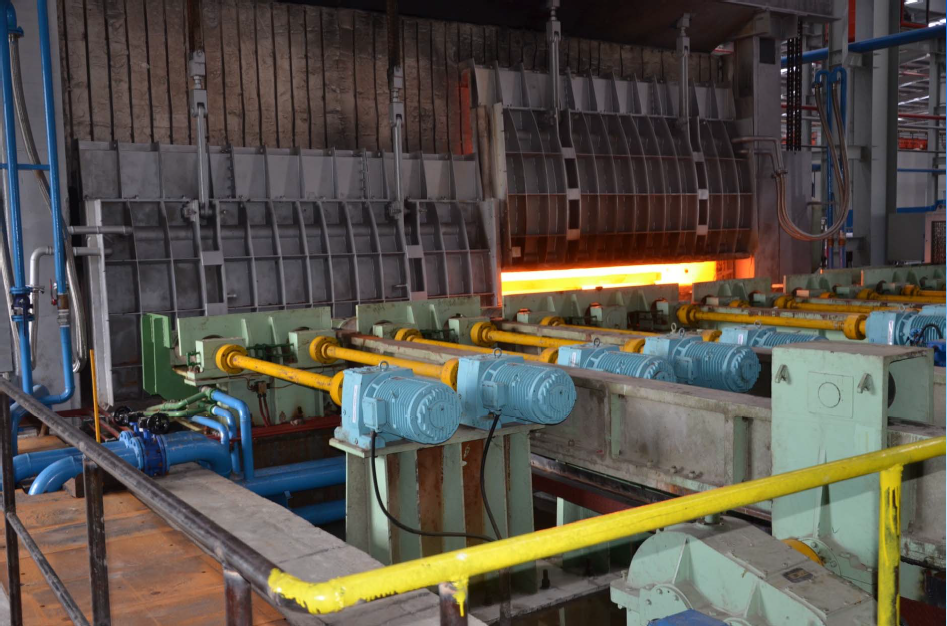
Furnace area
2.
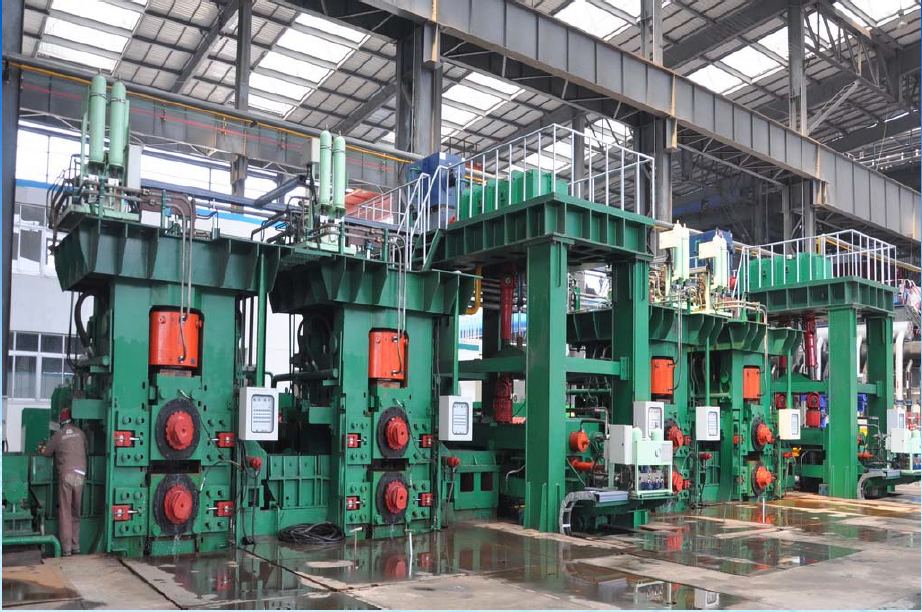
Rolling area
3.
Collecting area